
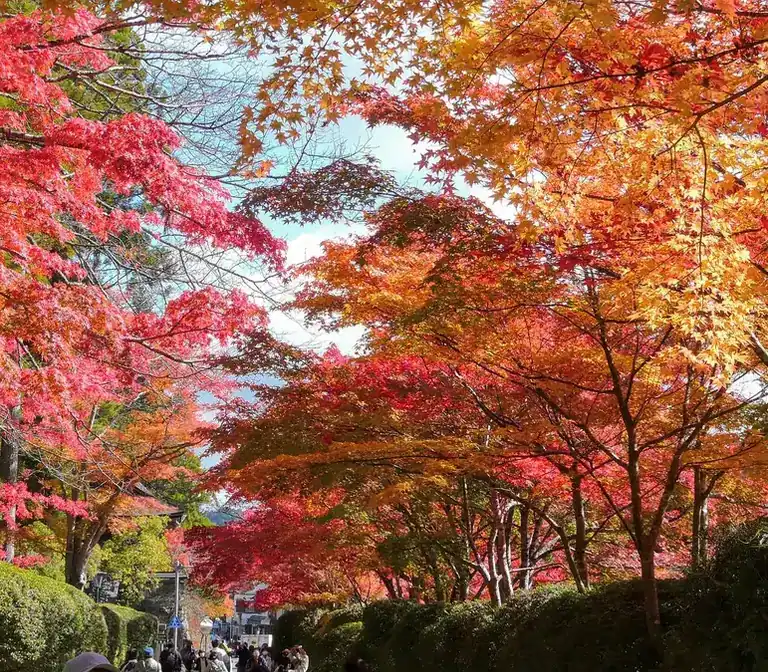
Koyasan offers more than autumn leaves. This Buddhist center in Wakayama has cherry blossoms and rhododendrons in spring, green forests in summer and the possibility of snow in winter. Temple architecture, shukubo stays, Buddhist vegetarian meals and traditional sweets add cultural depth throughout the year.
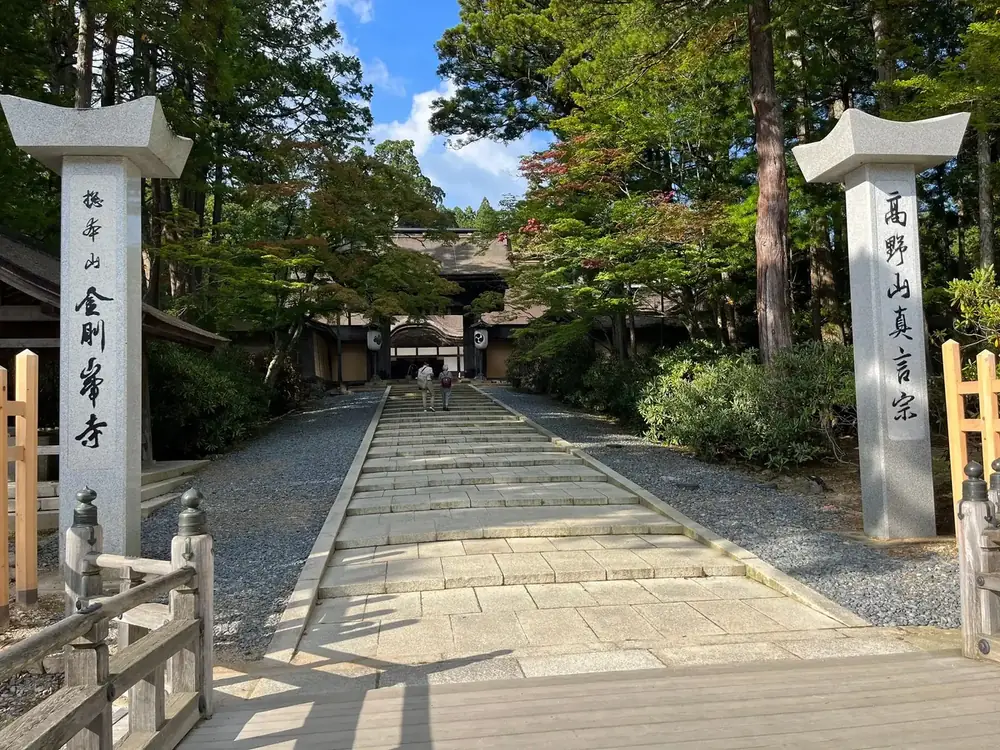
Spring | Late blooming cherry blossoms and rhododendrons
At its higher elevation, Koyasan’s cherry blossoms usually open later than those in central Osaka. Around mid-April in a typical year, look for the weeping cherry at Kongobuji Temple’s gate and blossoms around Danjo Garan. Rhododendrons at Kongosanmai-in and elsewhere are another highlight around Golden Week. Timing varies with the year’s weather.
Summer: Cedar Forests, Greenery & Hydrangeas
In summer, Koyasan is densely green, with cedar forests, moss, and temple gardens creating a peaceful atmosphere. Around the end of June to the end of July, there are also hydrangeas to enjoy in some areas. During the rainy season, you can arrange indoor worship and rest in the temple together to experience the mountain scenery that is different from that in autumn.
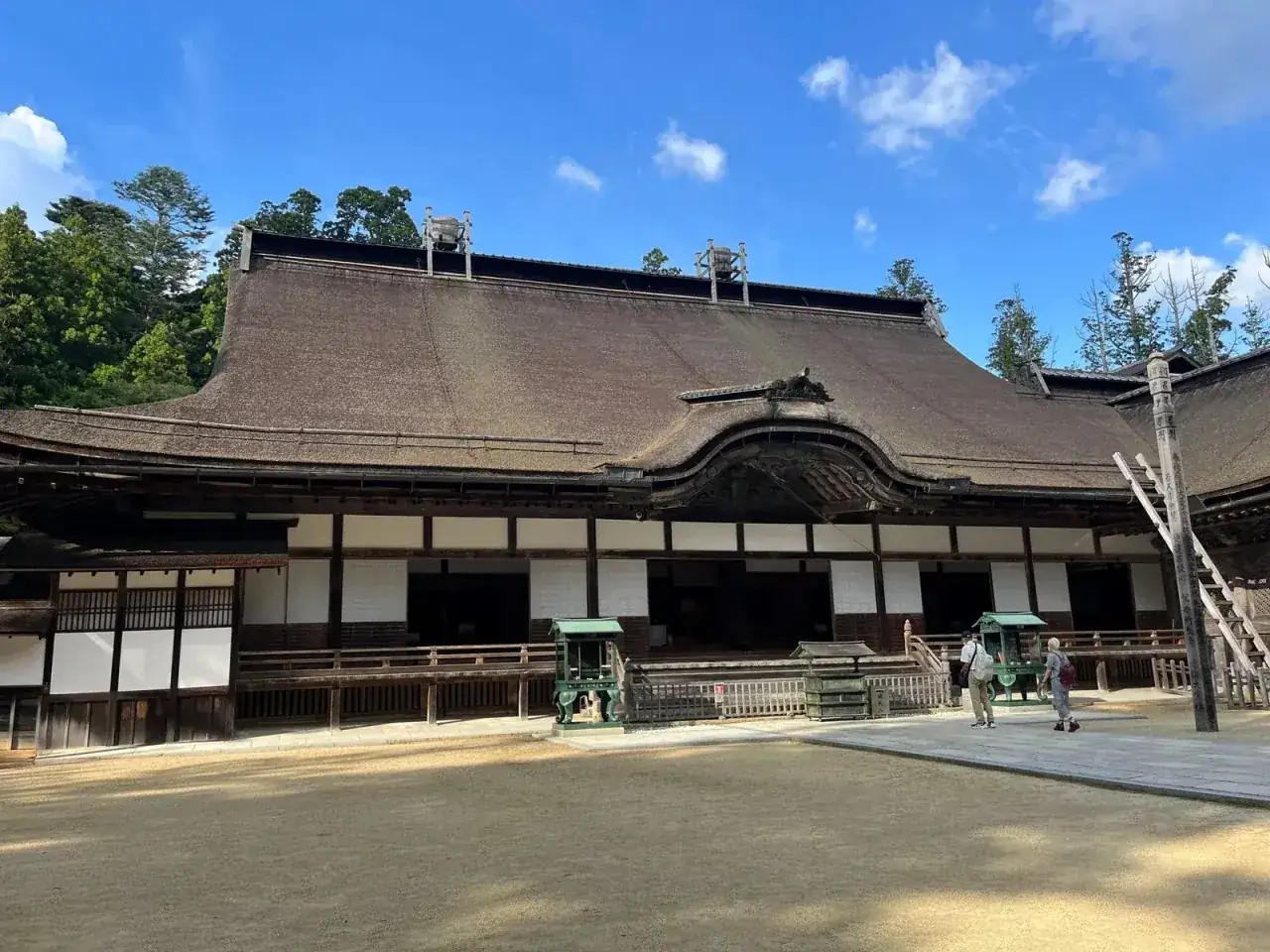
Autumn | Jabara-michi and Danjo Garan Autumn Leaves
Autumn is one of the most talked about seasons in Koyasan. In previous years, the main viewing period for red leaves is from late October to early November. Some scenic spots may have earlier or later viewing times. Near Jabara-michi, Danjo Garan, and Kongobuji Temple, red maples, ancient trees, and vermilion buildings complement each other.
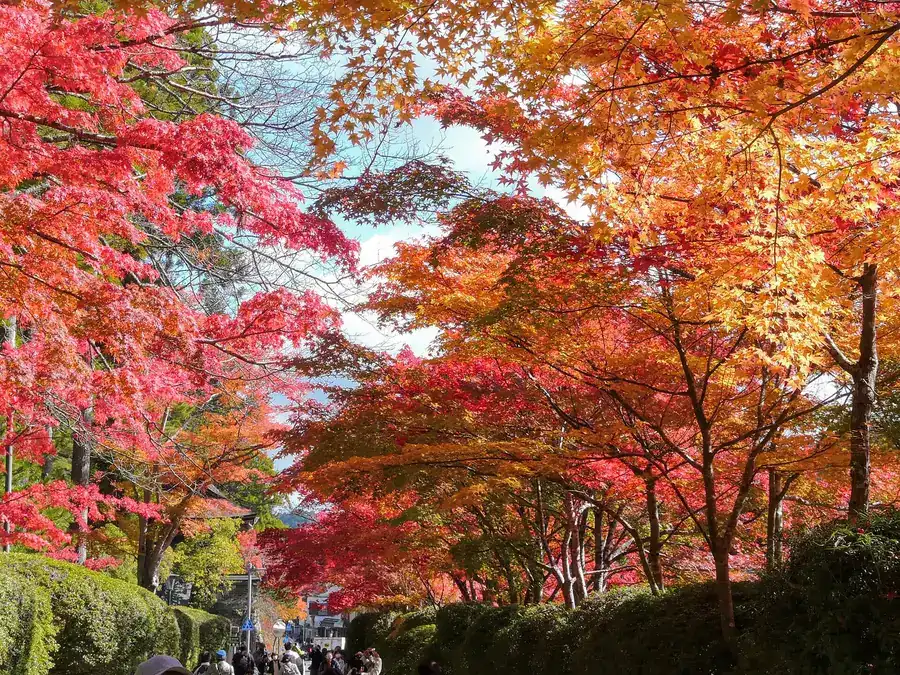
Fall 2026 Information: Kongobuji Temple announced that it will implement special nighttime lighting at the main entrance and Jabara-michi starting from October 20th and will continue until the end of the autumn leaf season that year. Please pay attention to the latest official announcements when arranging maple viewing.
Winter | Temples and shrines in the snow
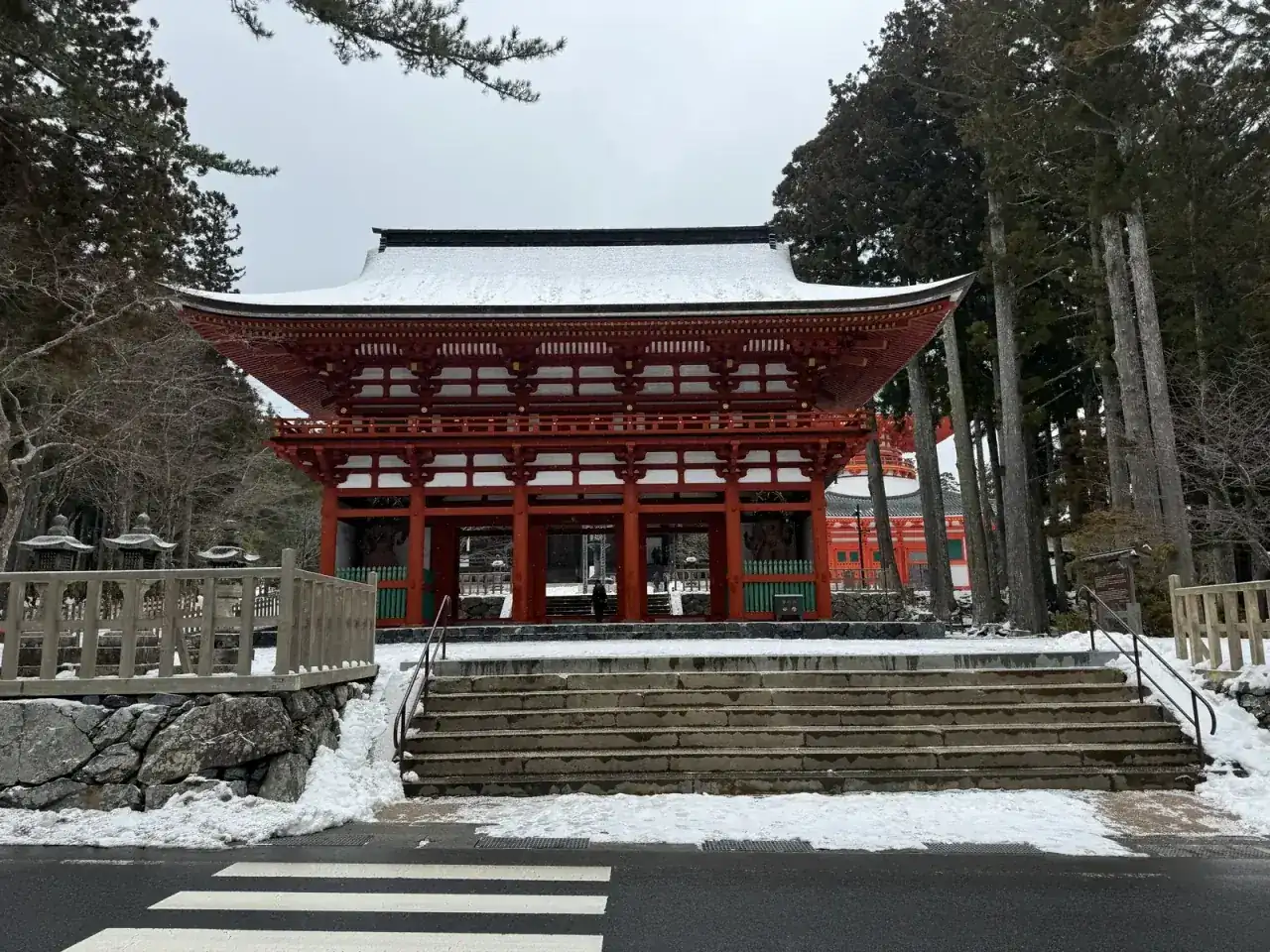
If there is snowfall in winter, the temple gate, cedar forests and stone steps will be covered with a layer of white snow, showing another kind of tranquility. Snow does not occur every day, and low temperatures and icy roads will also affect your visit. It is recommended to arrange your stay according to weather and traffic conditions.
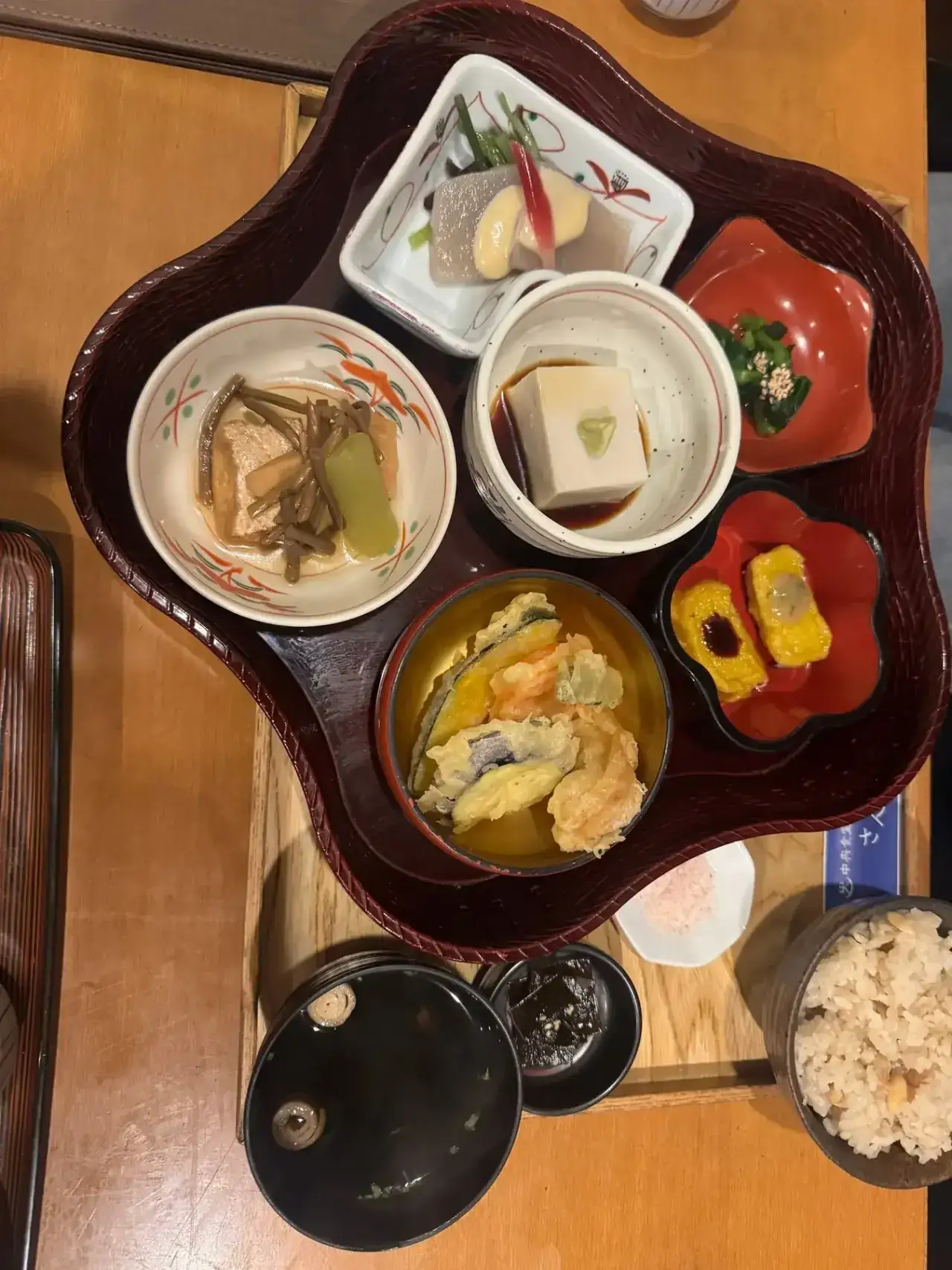
Shojin Ryori: Koyasan’s Buddhist Vegetarian Cuisine
Koyasan's shojin ryori Buddhist vegetarian cuisine is based on Buddhist food traditions, using vegetables, wild vegetables, cereals, seaweed and plant-based ingredients, paying attention to the flavor and seasonality of the ingredients themselves. sesame tofu is one of the representative local dishes. Some shukubo temple lodgings will serve shojin ryori Buddhist vegetarian cuisine during your stay, and some dining facilities can also arrange meals.
Wagashi: Traditional Sweets in Koyasan
Alongside temple visits, explore Koyasan’s traditional sweets: Miroku-ishi, yakimochi rice cakes and sasa-maki anpu, bean-filled wheat-gluten confections wrapped in bamboo grass. Their rice, bean paste and traditional techniques reveal local food culture. Enjoying them with hot tea offers a quiet break on the mountain.

Shukubo: Staying in a Temple
Some Koyasan temples offer shukubo accommodation. Depending on the temple, a stay may include morning services, Buddhist vegetarian meals and a quiet mountain evening. An overnight visit gives more time to experience temple life and the early-morning atmosphere.
How long should I stay in Koyasan?
- Half day: Suitable for concentrating on admiring a temple area or seasonal landscape.
- One day: Main temples, cultural experiences and meals can be arranged according to transportation and visit time.
- One night stay: Suitable for travelers who are interested in shukubo temple lodgings, shojin ryori Buddhist vegetarian cuisine and early morning temple atmosphere.
To get to Koyasan from Osaka, you usually need to combine Nankai Electric Railway, cable cars and mountain transportation. In addition to the season, planning should also consider the walking ability of fellow travelers, the time spent visiting and the time required for transfers.
Koyasan: Frequently Asked Questions
Is Koyasan worth visiting only in autumn?
No. Cherry blossoms in spring, new greenery in summer, red leaves in autumn, and snowy scenery in winter each have their own characteristics. Temples and mountains are worth admiring in all seasons.
Do I have to stay overnight to eat shojin ryori Buddhist vegetarian cuisine?
Not necessarily. In addition to some shukubo temple lodgings, there are also dining facilities offering shojin ryori Buddhist vegetarian cuisine on the mountain. The meal service methods and reservation conditions vary according to the operator's announcement.
Does it always snow in Koyasan in winter?
Not necessarily. Snow may fall in winter, but snow conditions vary from day to day and must be judged by the climate of the year.
Can Koyasan be combined with other attractions in Wakayama?
It can be combined with other Wakayama area attractions according to the travel days and seasons; if you arrange a cross-regional tour, it is recommended to reserve ample transportation and rest time. You can also read further Wakayama seasonal fruits.
The charm of Koyasan lies not only in the scenery of a certain season, but also in the unique atmosphere formed by temples, mountains, forests and traditional culture. If you want to arrange your trip according to travel dates, seasons and accommodation needs, please contact TUKISUMI.
Inquire about Kansai customized tours
Source:Koya Town Four Seasons Information|Kongobuji Temple Autumn Lighting Announcement|Wakayama Prefecture Official Tourism