
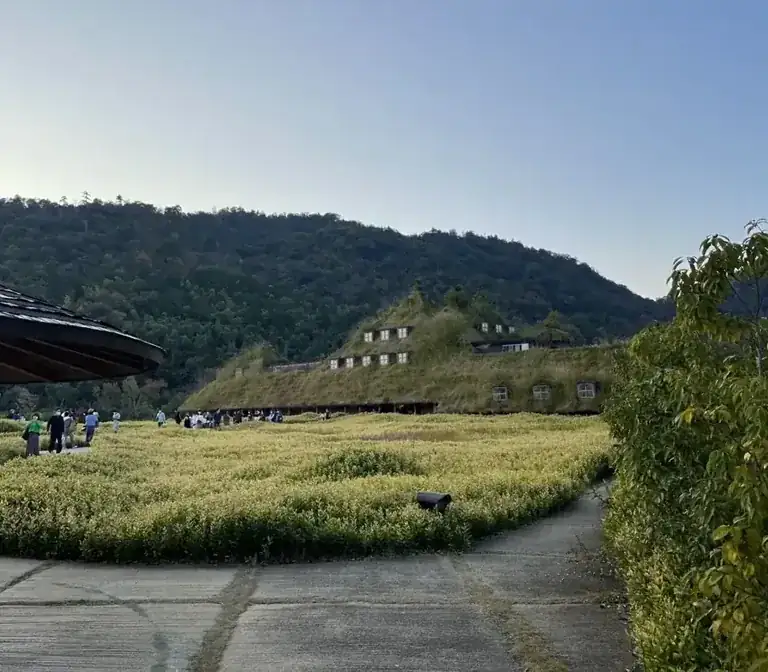
Lake Biwa is often the first place visitors associate with Shiga. Around it, confectionery traditions, historic waterways and satoyama countryside offer a more detailed introduction to the region. This guide explores La Collina and Hachiman-bori in Omihachiman, and Kano Shojuan’s Sunai no Sato in the hills of Otsu, connecting architecture and scenery with Japanese sweets.
These are not three neighboring lakeside stops. La Collina and Hachiman-bori are in Omihachiman, while Sunai no Sato is in the countryside of southern Otsu. Choose experiences for your group’s cultural interests, walking ability and dining preferences, and allow travel time between the two areas.
La Collina Omihachiman: Architecture & Confectionery
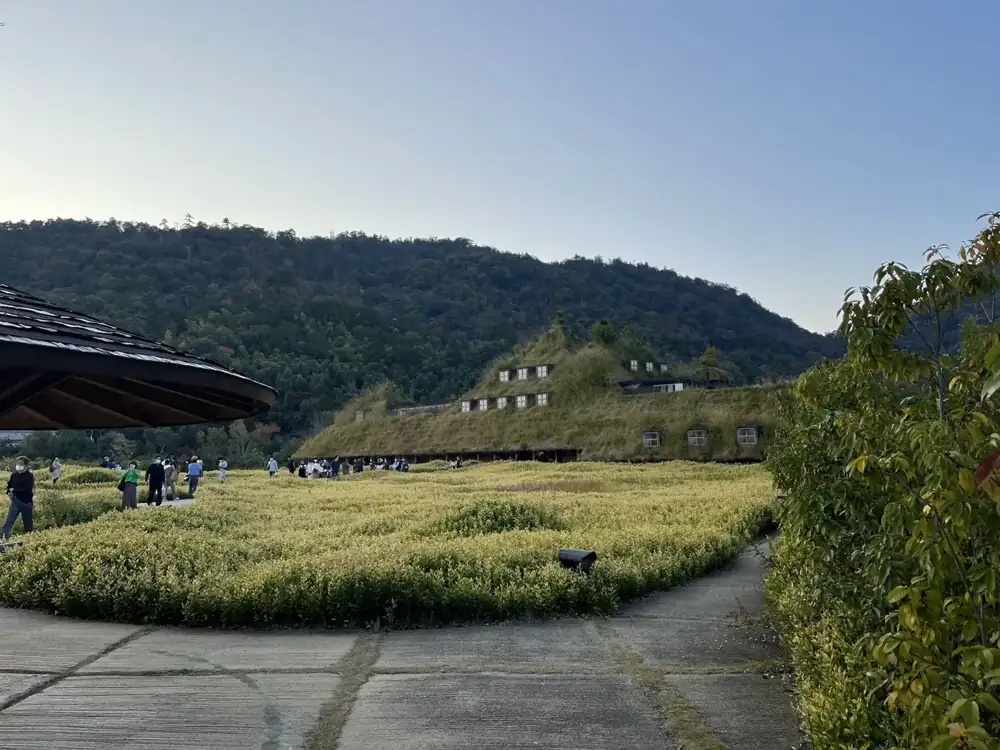
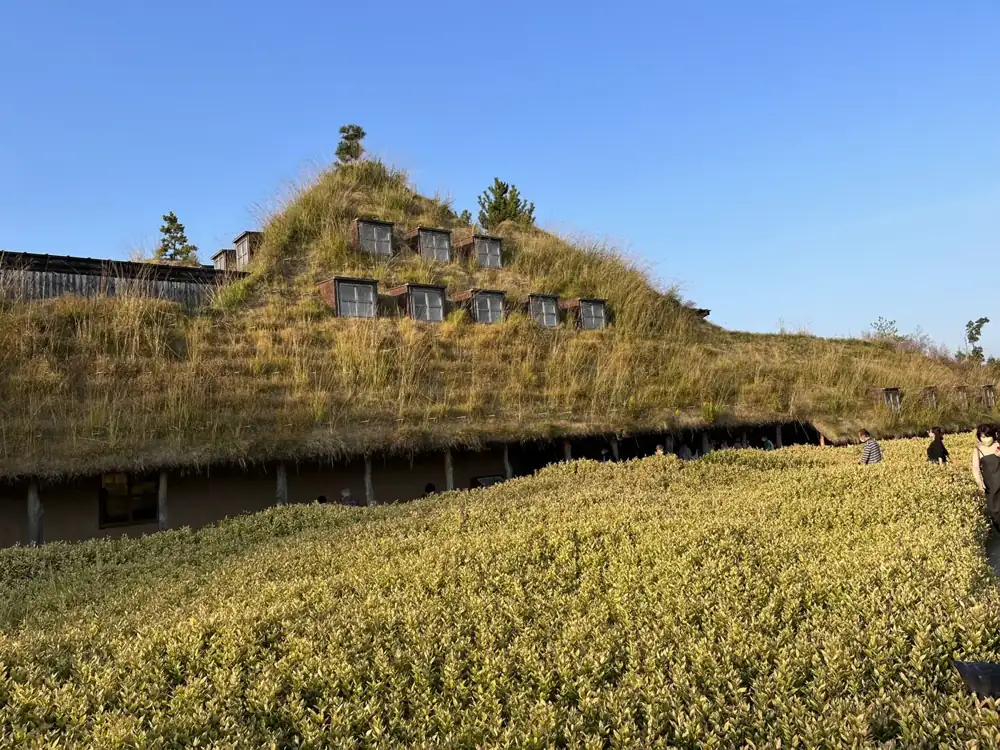
La Collina Omihachiman is the flagship destination of long-established Shiga confectioners Taneya and CLUB HARIE. Its grass-covered roof blends with the surrounding fields, turning a visit for sweets into an opportunity to enjoy architecture, landscape and design.
CLUB HARIE’s baumkuchen is a highlight. At the Baum Factory, a viewing route offers a look at the cake’s layered baking process and craftsmanship. The production displays add interest for families; the grass roof and changing seasons also appeal to visitors who enjoy design and photography.
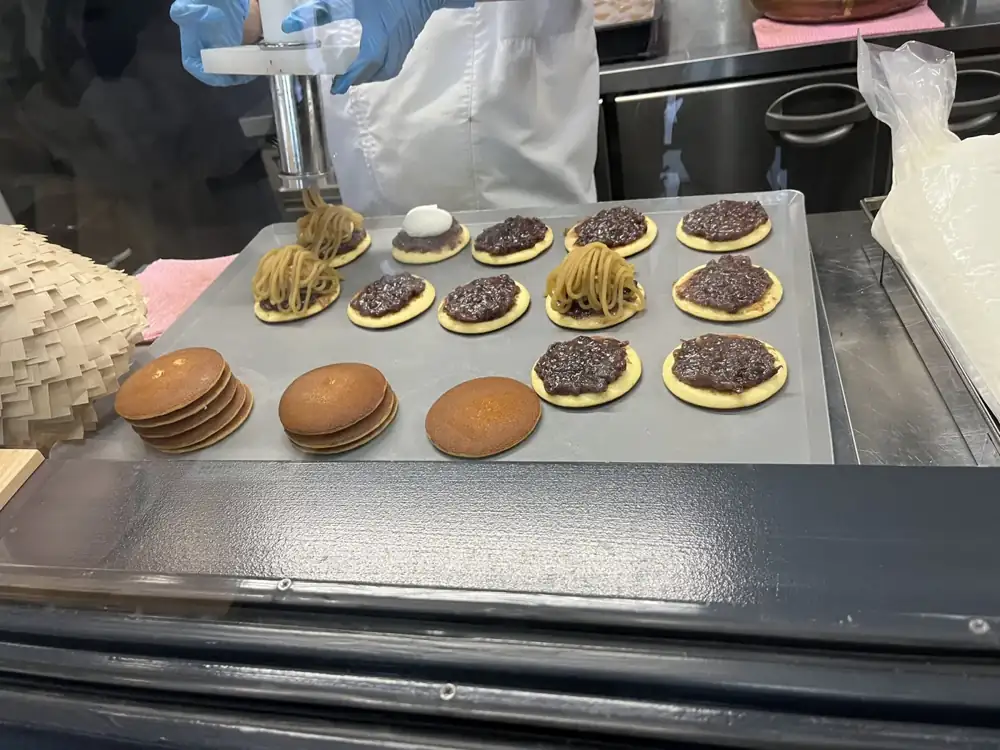
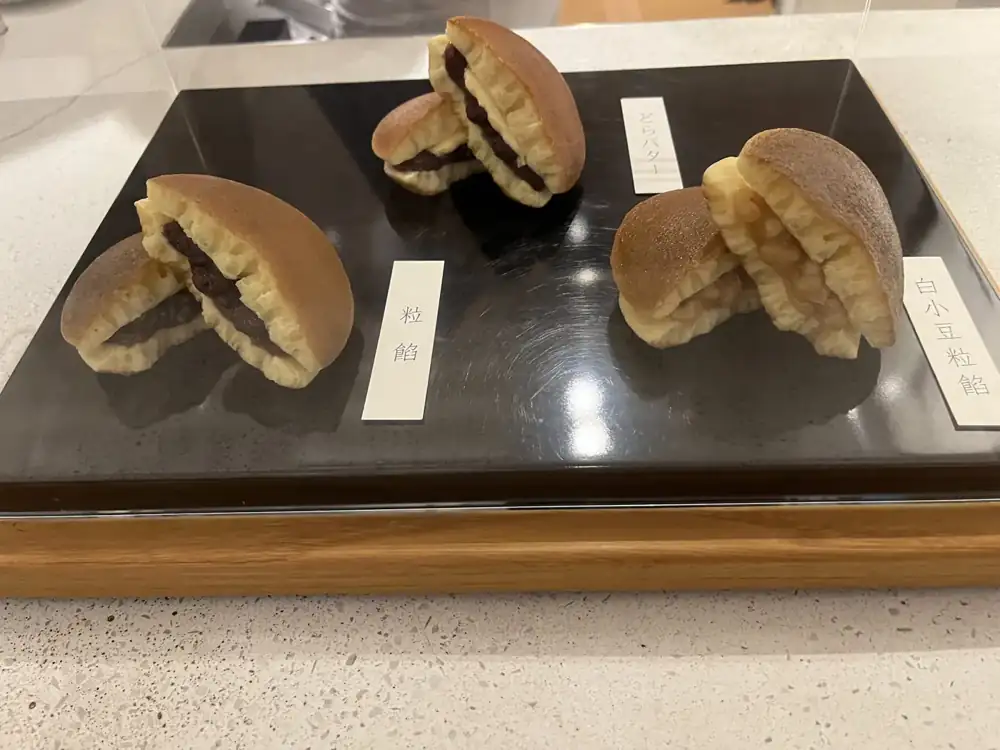
Taneya’s wagashi traditions are another part of La Collina. Alongside baumkuchen, sweets and dorayaki introduce a range of Japanese and Western confectionery. Where live production is visible, it offers a closer look at the care given to ingredients and technique.
The roof and fields are vividly green in spring and summer, while autumn and winter bring changes in color and light. Shops can be busy at popular times; consult the latest booking information for tours or specific experiences. The Baum Factory viewing route has no elevator or ramp, so visitors who cannot manage stairs should focus on the main shops and level areas.
Hachiman-bori: Historic Waterways & Omi Merchants
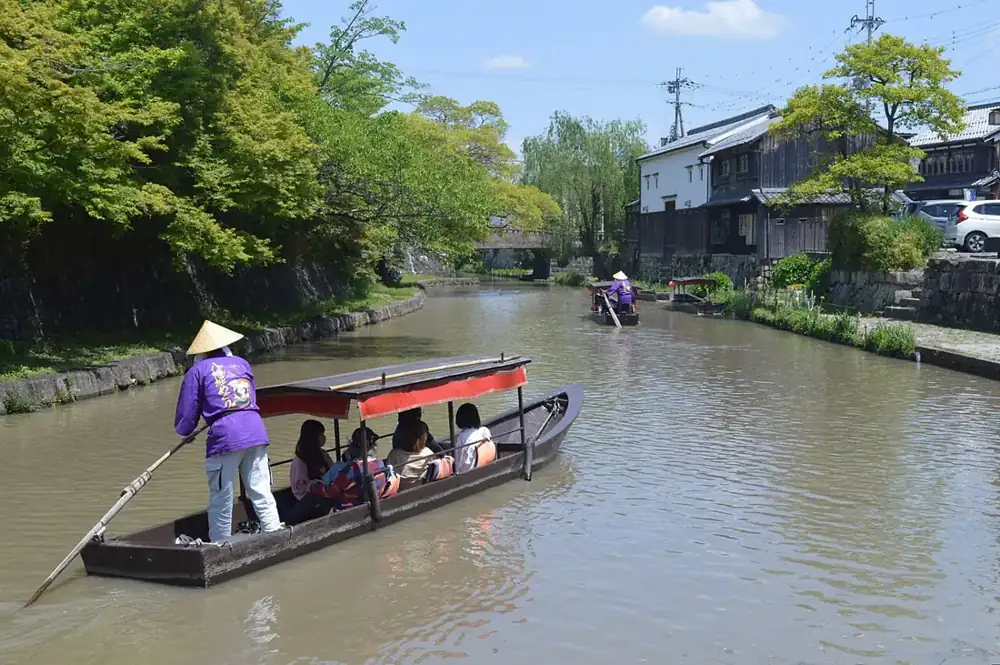
Hachiman-bori Canal is a representative historical waterway of Omihachiman and is closely related to the development of the castle town in the Toyotomi Hideji era. In the past, shipping connected Lake Biwa with commercial activities, and the machiya, white walls and stone walls along the coast also left traces of Omi merchants' exchanges.
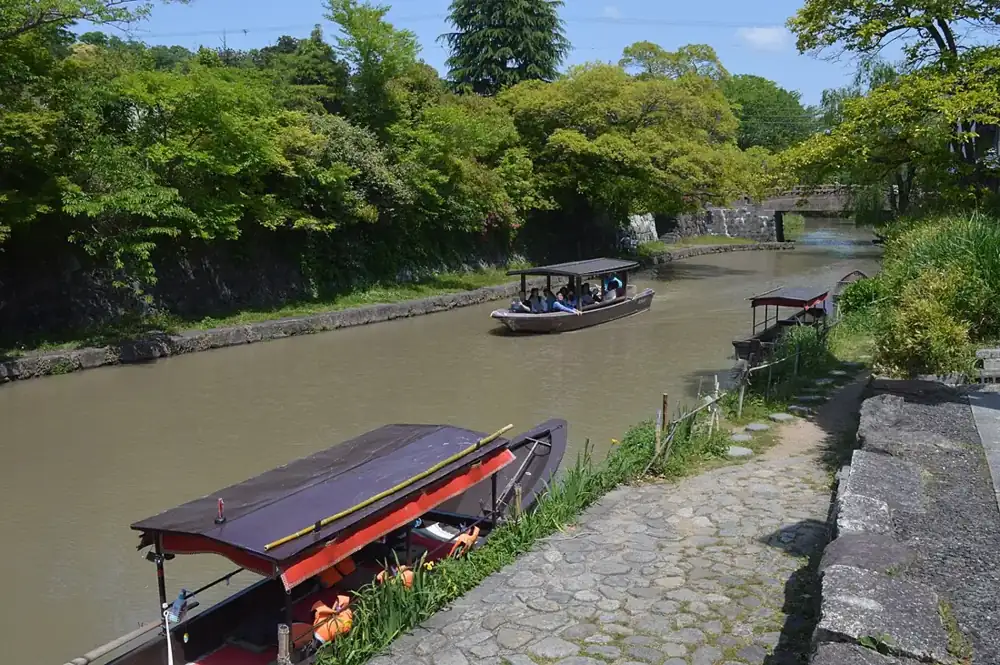
The charm here is not to take photos in a hurry, but to walk along the waterway and pay attention to the reflection on the water and the proportions of traditional street houses and bridges. There are cherry blossoms in spring, rich greenery on the waterfront in summer, calm colors in autumn, and the quiet outline of the old streets in winter. If you choose to experience the boat ride, you can enjoy the street views on both sides of the strait from the water surface; boat schedules, seasonal operations and boarding conditions are subject to the operator's announcement on the day.
Hachiman-bori cruises and suigo water-country cruises are different experiences. The former follow historic canals past stone walls and white storehouses, with a typical journey of about 30 minutes. The latter explore reed beds and scenery around Lake Nishinoko. Boarding points and routes differ, so choose according to your interests.
Hachiman-bori makes the history of Omi merchants tangible. Adjust the balance of walking and boat travel to your group’s needs. Stone steps and changes in level along the old streets may affect access and comfort.
Omi Beef: Another Side of Shiga’s Food Culture
Shiga's food is not limited to wagashi (Japanese sweets), Omi beef is also a local flavor worth knowing. As one of Japan's representative Wagyu brands, Omi beef is often presented in sukiyaki, shabu-shabu or teppanyaki; different dishes can bring out differences in fat, meat quality and ingredient combinations.
For a meal that connects local cuisine with the wider cultural experience, consider Sanjutei at Sunai no Sato, introduced below. It brings Shiga’s savory food traditions and confectionery culture into the same visit.
Sunai no Sato: Wagashi in the Otsu Countryside

Kano Shojuan’s Sunai no Sato lies in the satoyama countryside of Otsu, well apart from the two Omihachiman destinations. Its sweets, seasonal plants, dining and cultural activities suit visitors interested in everyday Japanese aesthetics.
The signature sweet Amo wraps soft habutae mochi in finely textured sweet red bean paste. Its simple appearance contrasts with its layers of texture. Tea service, seasonal meals and occasional activities offer further ways to understand the relationship between wagashi and the seasons.
The spring plum grove and flowering period activities are the most representative; early summer has seasonal themes such as picking plums, and autumn is suitable for experiencing the colors and fruits of Satoyama. The seasonal content may be adjusted every year. When selecting, priority should be given to tourists’ preferred flower views, tea, food, or handicrafts, and there is no need to insist on experiencing all the items at once.

Sanjutei: Omi Beef & Seasonal Dining
Sanjutei serves seasonal Sunai kaiseki and Omi beef teppanyaki, linking Shiga ingredients with the surrounding satoyama gardens. Reservations are required. Confirm the latest menus, availability and booking conditions with the restaurant.
Autumn 2026: Amo Festival
The 2026 Autumn Amo Festival runs from November 1 to November 23 held,Closed on Wednesday and includes limited Amo products and food, plus Amo-making experiences and children’s confectionery classes on selected dates. Amo-making sessions are listed for November 1, 8 and 22; children’s classes for November 7, 14 and 21. These details apply to 2026; consult the current event page for other years.
Seasonal Highlights
Spring
- La Collina: A green grass roof and surrounding fields
- Hachiman-bori Canal: Cherry blossoms and waterfront street scene.
- Sunai no Sato: Plum blossoms, spring tea sweets and garden landscape.
Summer
- La Collina: Observation of dark green buildings and dessert making.
- Hachiman-bori Canal: Green waterways and walks along the banks.
- Sunai no Sato: Early summer activities such as satoyama plants and plum picking.
Autumn
- La Collina: Autumn colors and Baumkuchen.
- Hachiman-bori Canal: Autumn scenery along the waterfront and historical street houses.
- Sunai no Sato: wagashi (Japanese sweets) theme activities, autumn food.
Winter
- La Collina: Architectural lines, indoor dessert experience.
- Hachiman-bori Canal: Quiet old street atmosphere.
- Sunai no Sato: Tea party and seasonal fruits.
Choosing Experiences for Your Group
Families with children
La Collina’s production displays and activities at Sunai no Sato can suit families. Check stairs, age requirements and booking conditions before choosing an experience.
Couples
Recommended are the grass-roofed buildings, Hachiman-bori Canal waterfront, and seasonal tea and snacks. You can reserve time to enjoy the scenery and dine.
Older travelers
Recommend the Hachiman-bori Canal historical street scene, Satoyama tea party and fine dining. Assess walking distance, stair steps, and seating needs when scheduling.
Culture and food lovers
We recommend the history of Omi merchants, wagashi (Japanese sweets) craftsmen and Omi beef. Make in-depth choices based on theme, and don’t pursue the number of attractions.
Explore Shiga Through Sweets & Waterways
La Collina connects contemporary confectionery with architecture and landscape. Hachiman-bori preserves the history of water transport and merchants, while Sunai no Sato brings together seasons, wagashi and country dining. Their distinct qualities allow a Shiga visit to be shaped around your companions’ ages and cultural interests.
For a Kansai trip with a stronger focus on food, architecture or history, TUKISUMI can help discuss experiences that suit your interests and travel companions.
Further reading:Explore more themed tours.
Official information: La Collina: Access Considerations · Kano Shojuan: Autumn Amo Festival