
Kyoto often brings to mind temples, machiya townhouses and historic streets. Head north to the Sea of Japan and the prefecture reveals another side: the pine-covered sandbar of Amanohashidate and the waterfront boathouses of Ine. One offers sweeping views from above; the other rewards time spent learning about a working fishing village. Add Tango’s winter seafood and hot springs, and this becomes a journey into life in coastal Kyoto.
Amanohashidate and Ine work well together. Compare their landscapes and experiences, then decide how long to stay based on the season, your companions and the accommodation you prefer. Each has a distinct character; there is no need to rush through every viewpoint.
Amanohashidate: One of Japan’s Three Scenic Views
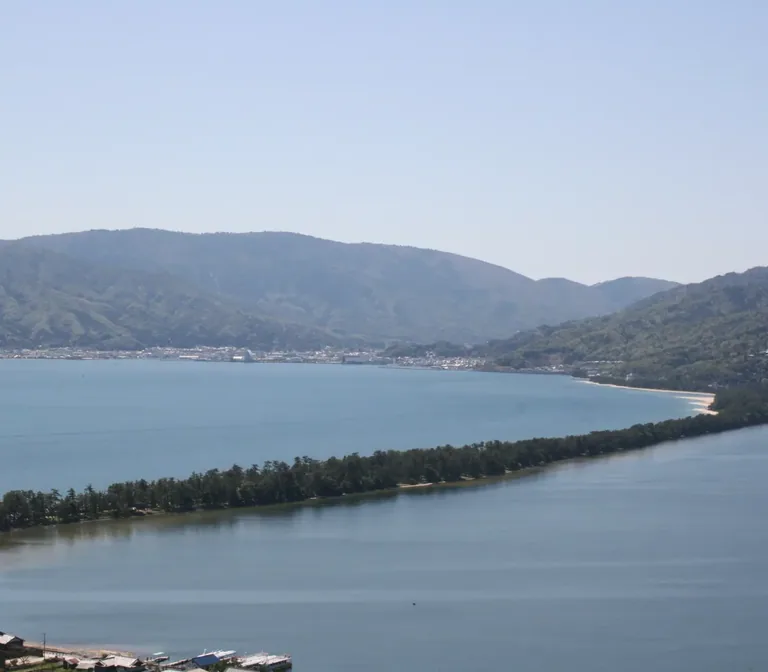
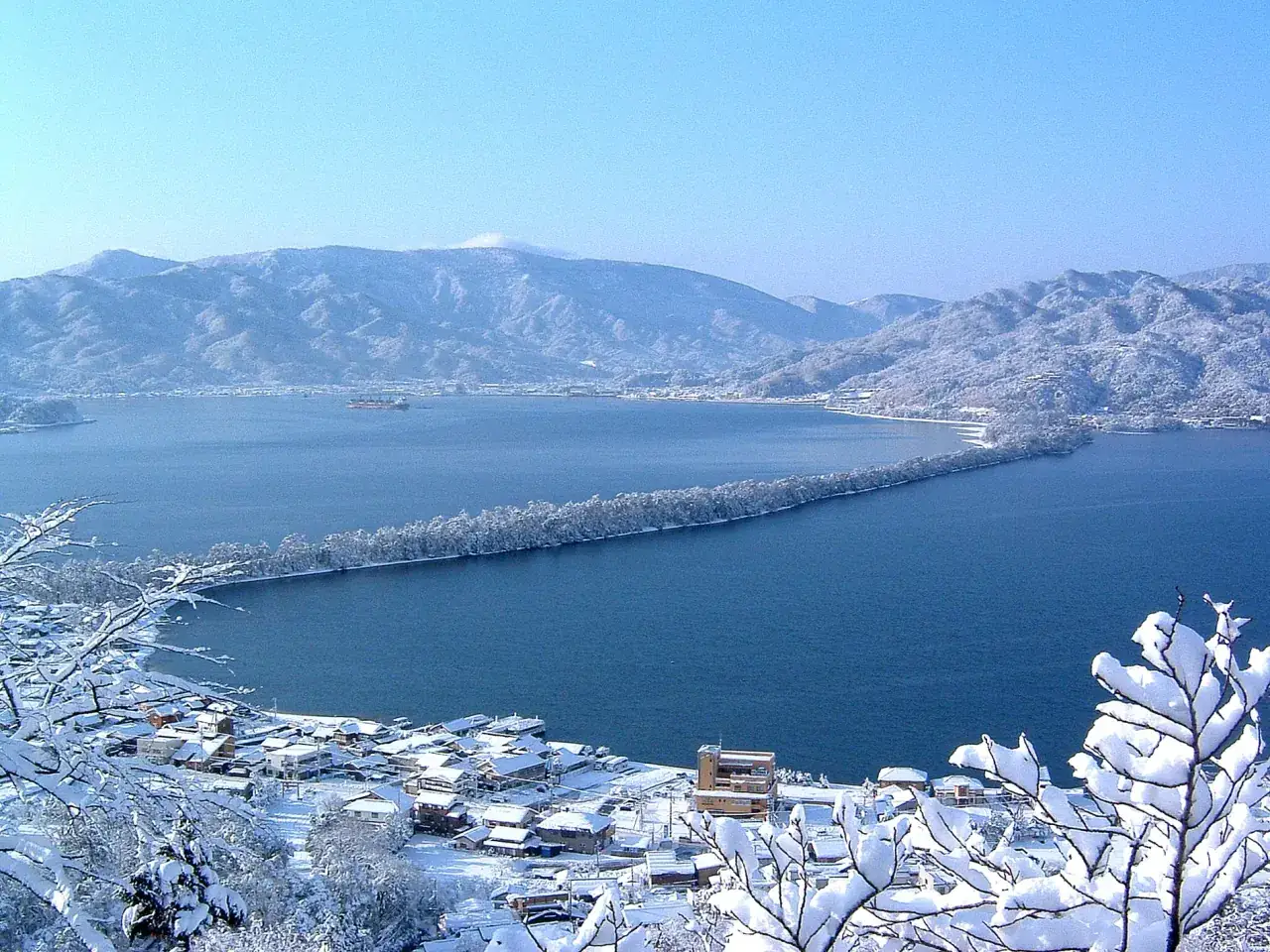
Amanohashidate lies in Miyazu Bay, Kyoto Prefecture, and is counted among Japan’s Three Scenic Views alongside Matsushima in Miyagi and Miyajima in Hiroshima. Its natural sandbar, about 3.6 kilometers long and planted with roughly 5,000 pines, separates Miyazu Bay from the Aso Sea. Seen from the hills, it resembles a bridge reaching toward the sky. Water, clouds and seasonal colors continually change its appearance.
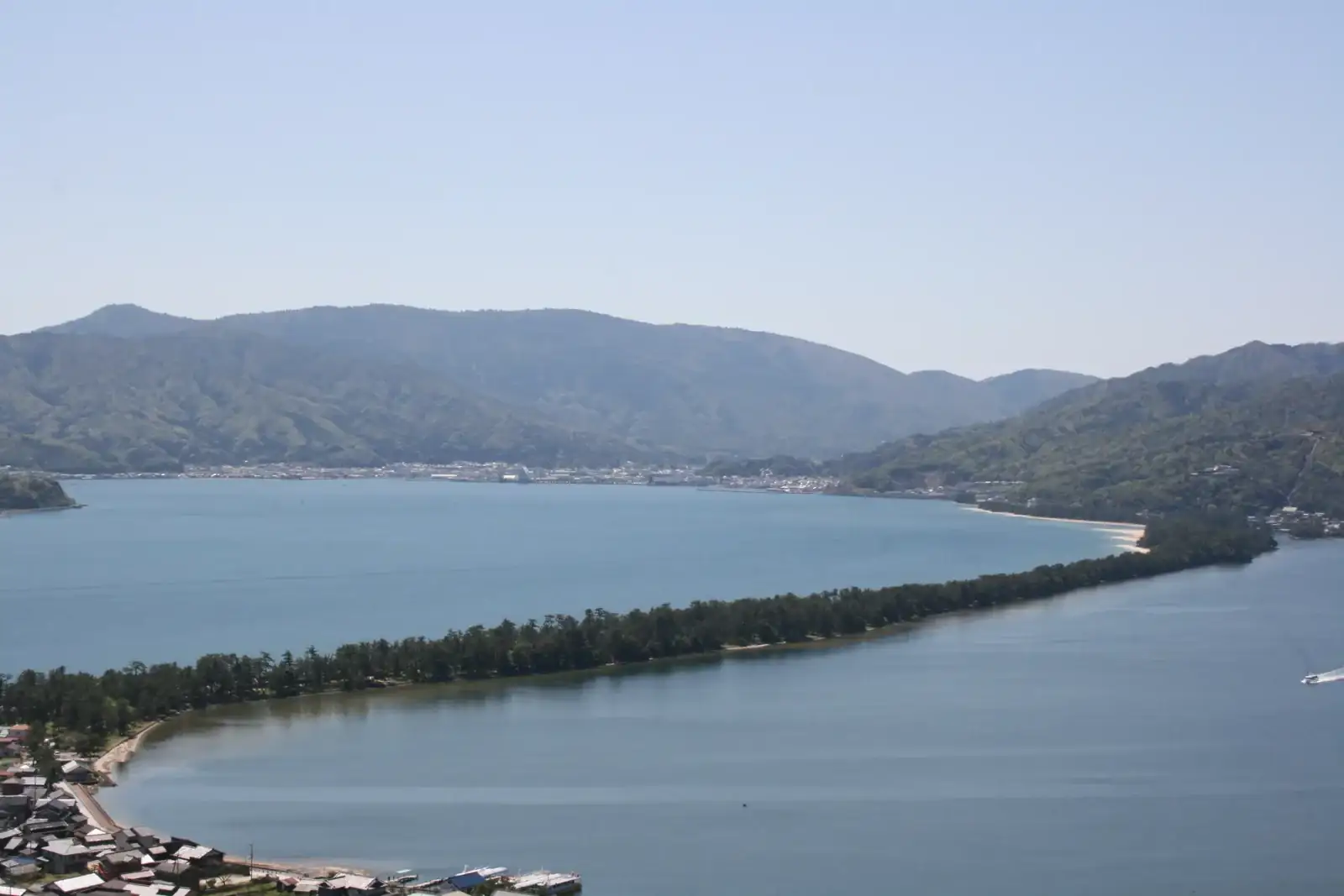
The traditional way to view Amanohashidate is matanozoki: turn your back to the bay, bend forward and look between your legs. With sea and sky inverted, the sandbar seems to float in the air. The view is impressive without doing this, too. You can combine the lookout with the pine grove and coast, or focus on the observation facilities according to your mobility and the weather.
View Land or Kasamatsu Park?
Both places can overlook Amanohashidate, but they are not from the same angle and have different tourist atmospheres. If the interests, age or travel time of the traveler are limited, it is usually more interesting to choose the right place than to rush through both sides.
| Comparison | Amanohashidate View Land | AmanohashidateKasamatsu Park |
|---|---|---|
| Location | South side of Amanohashidate, Mt. Munju area | Amanohashidate north side, Fuzhong area mountain |
| represent landscape | "Hiryukan (Flying Dragon View)": The sandbank flies into the sky like a dragon | "Shoryukan (Rising Dragon View)": The sandbank rises to the sky like a dragon |
| experience the atmosphere | There are observation facilities and small entertainment experiences, which are more lively | Focusing on the scenery, viewing platform and surrounding history and culture, the rhythm is relatively calm. |
| more suitable | Parents and children, travelers who want to take pictures of classic scenery and want a variety of activities | Couples, older travelers, and people who prefer vast scenery and cultural atmosphere |
View Land: The Southern Flying Dragon View
View Land looks north along the winding sandbar, the perspective known as the Flying Dragon View. Observation areas and small amusement attractions offer variety for families. Chairlifts and a monorail provide access; check the day’s operating notices for weather and maintenance changes.
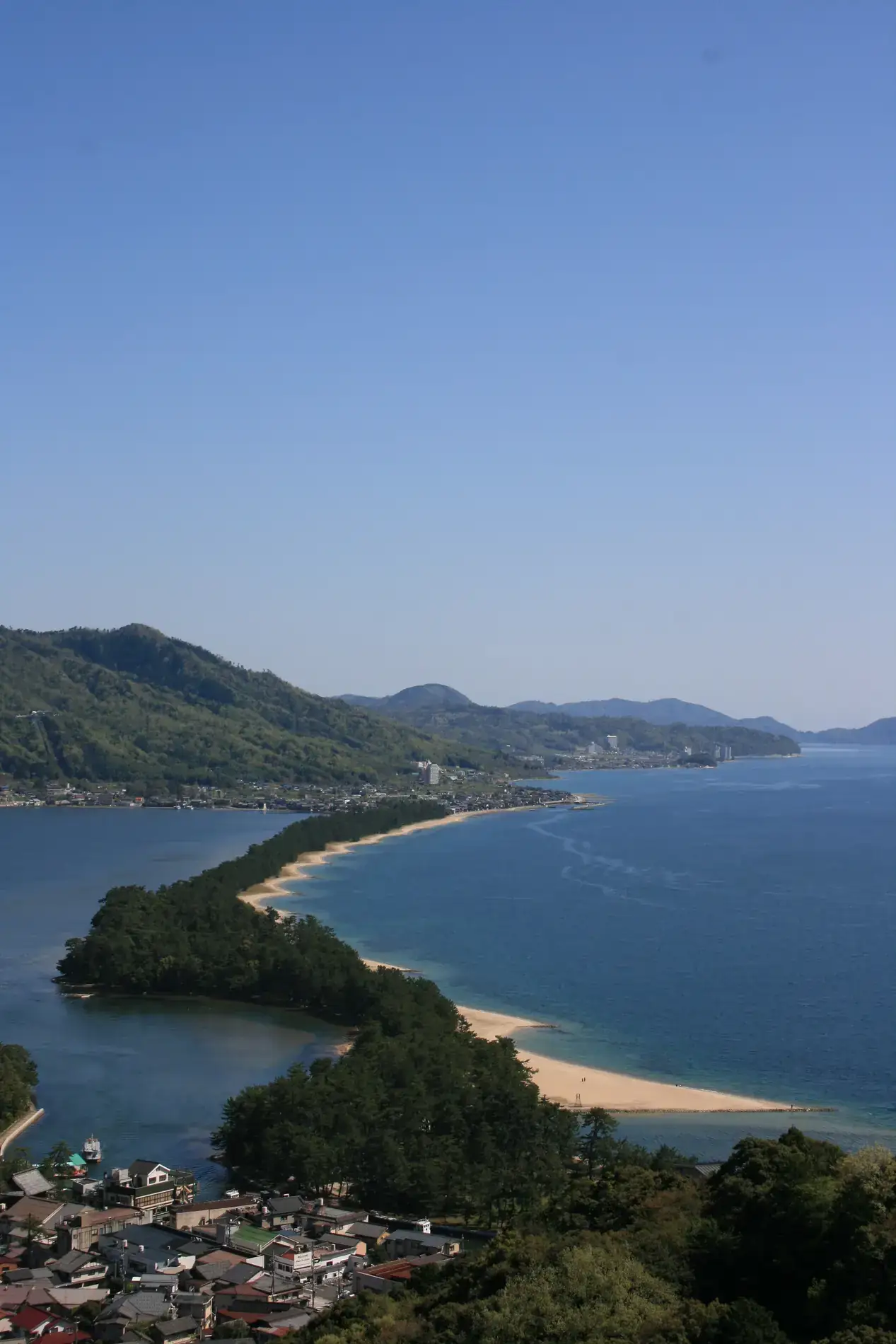
Kasamatsu Park: The Northern Rising Dragon View
Kasamatsu Park overlooks the opposite end of Amanohashidate, offering the Rising Dragon View. It also has a traditional matanozoki viewpoint. Nearby Motoise Kono Shrine and Nariaiji Temple add a cultural dimension to the coastal scenery. It suits visitors who enjoy landscape photography and a quieter pace.
Ine’s Funaya: A Living Fishing Village
Around 230 funaya boathouses line Ine Bay on the eastern Tango Peninsula. Their distinctive design grew from fishing life: the ground floor traditionally sheltered boats and equipment, while upper floors were used for drying nets and storage. Uses now vary by household. Many residents live in a separate main house across the road, so these buildings should not all be understood as ordinary waterfront homes.
Ineura became a nationally designated Important Preservation District for Groups of Traditional Buildings in 2005. The designation protects the settlement and fishing culture as well as its facades. This is a place where people live and work. Do not enter private boathouses, gardens or piers without permission, or disrupt residents to take photographs.
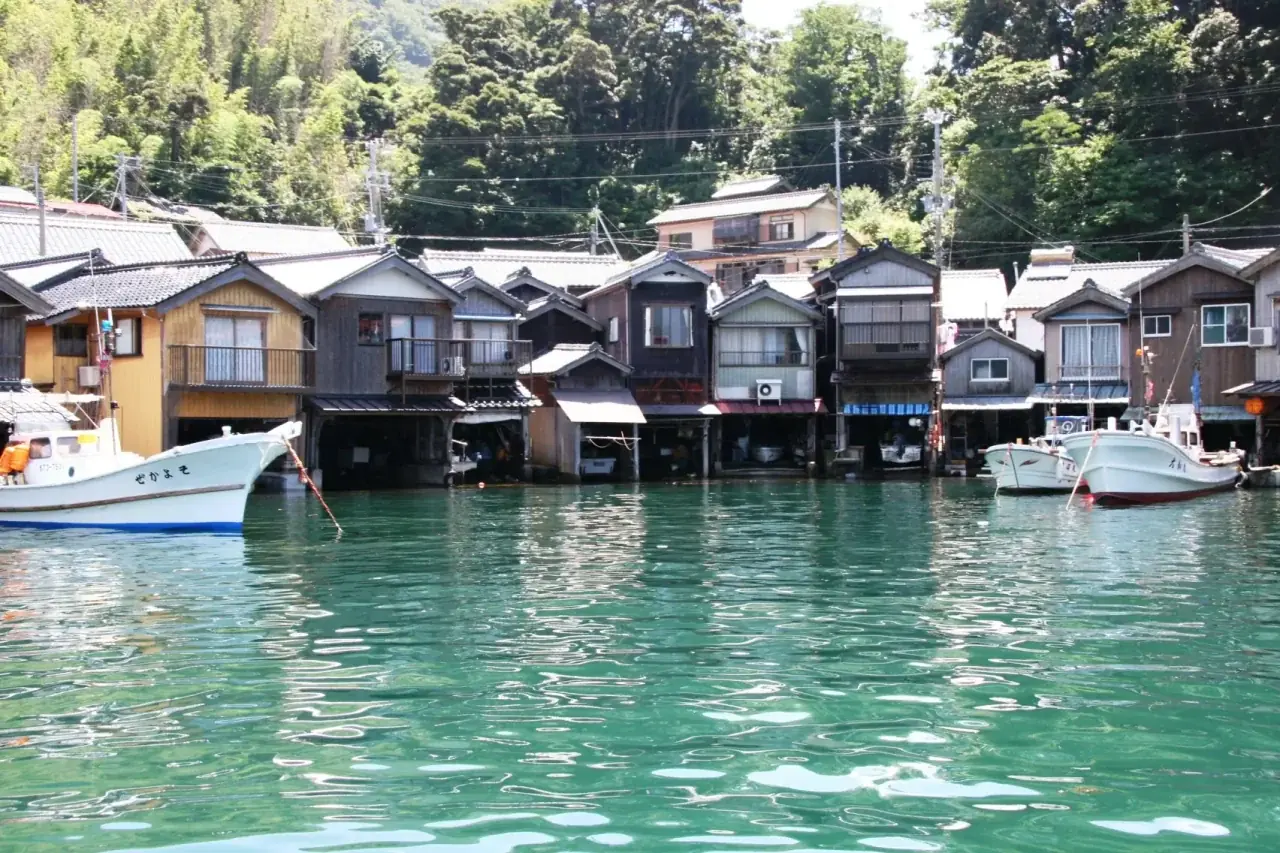
When approaching Ine, you may want to pay attention to the overall relationship between funaya boathouses, fishing boats, shore work spaces and hillside settlements. Choose a guided tour arranged by the local or visit the legally open funaya boathouses to understand the value of this fishing village better than just chasing photos on the shore.
Ine Bay from the Water: Cruise Boats & Sea Taxis
Looking at Funaya Boathouses from the land, you can observe the streets and architectural details; only from the sea can you fully understand the continuous scenery surrounded by the bay. The two methods are complementary, and passengers can choose according to their fitness, the number of people traveling with them, and the sea conditions of the day.
Ine Bay Cruise: A Wider, More Stable Boat
The "Ine Bay Tour Boat" takes about 25 minutes and usually departs every half hour. The boat can overlook the funaya boathouses from the sea. According to the operator's public information, the ticket price is 1,200 yen for adults and 600 yen for elementary school students; on-site operations, departures and fares are still subject to the operator's announcement on the day. The ship is larger and suitable for first-time visitors, families with children, older travelers and small groups. It may be suspended in case of strong winds or poor sea conditions.

Small Sea Taxis: Local Stories on the Water
Small sea taxis led by local captains usually stay closer to the water. During the tour, you can hear stories about the fishing, funaya boathouses and life in the bay. This type of experience has fewer people and is more directly affected by sea conditions. Some ships have no rain protection facilities. If you are a small group that values cultural exchanges, or want a more private time with sea view, you can add this option to your list; in winter and rainy days, you must prepare alternative arrangements.
Amanohashidate & Ine Through the Seasons
Coastal Kyoto offers different reasons to visit in each season. Spring and autumn are often comfortable for sightseeing; summer brings vivid sea colors. Winter centers on crab, yellowtail, hot springs and the possibility of snow. Choose for the experience you want rather than ranking one season above another.
| Season | Scenery and experience | Suitable travel expectations |
|---|---|---|
| Spring | March–May | Cherry blossoms, new greenery, and the temperature is getting warmer; relaxing and looking forward to the beach are more comfortable | Want to combine nature photos, cultural visits and a relaxed pace |
| Summer | June–August | The contrast between the blue sea, white sand and emerald pine forest is sharp; you can consider a sea experience | Prefer bright sea views, family activities and a sense of summer vacation |
| Autumn | September–November | The weather is getting cooler and the bay is softer; there are opportunities to enjoy maple leaves in the surrounding temples | Like landscape photography, slow travel and cultural atmosphere |
| Winter | December–February | Matsuba crab, winter yellowtail, hot springs and hot springs; sunny sea views and snowy views have their own charms | Pay attention to seasonal cuisine, accommodation quality and quiet atmosphere |
Weather, temperatures and catches vary each year. In winter, northern Kyoto’s coastal winds, snow and possible road or boat changes require more flexibility than a visit to central Kyoto.
Tango in Winter: Crab, Yellowtail & Hot Springs
Matsuba Crab & Taiza Crab
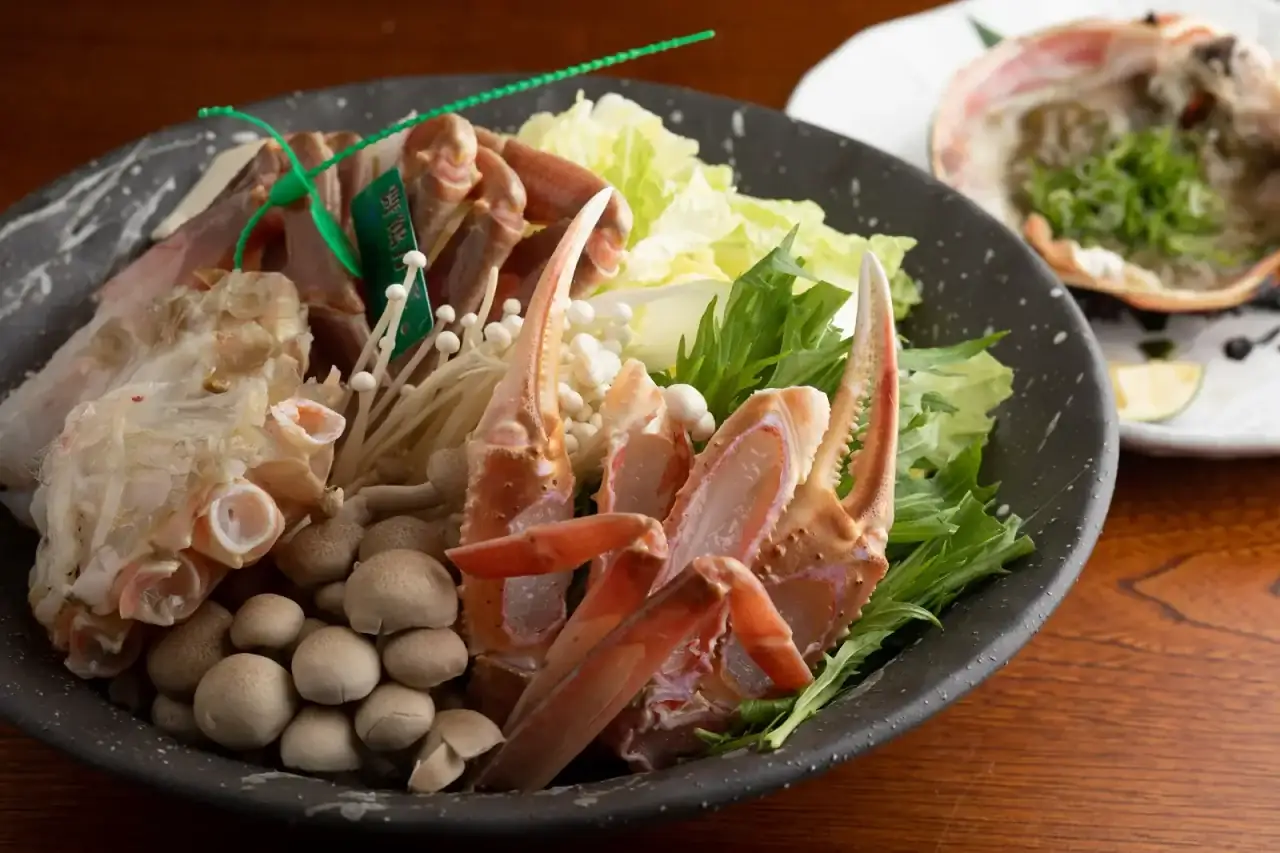
Matsuba snow crab is a highlight of Tango’s winter food culture, served as sashimi, grilled crab, hot pot or rice porridge. Taiza crab landed at Taiza Port in Kyotango is particularly prized and limited in supply; not all Tango crab meals use it. The usual fishing season runs from early November into March. Confirm the restaurant or ryokan’s actual supply, stated origin and menu.
Ine’s Winter Yellowtail
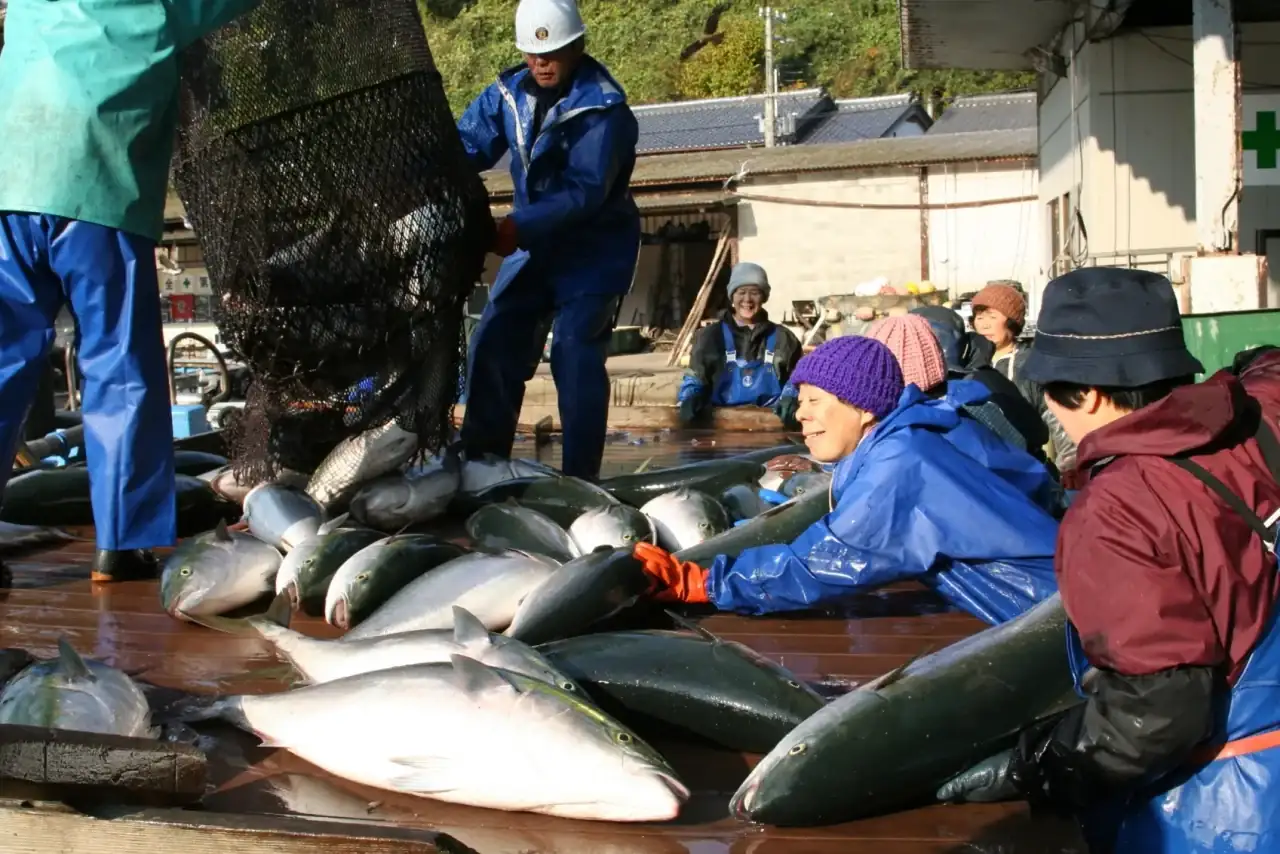
Winter yellowtail develops a rich flavor and is often served as sashimi or buri shabu, thin slices briefly cooked in broth. Ine’s long association with yellowtail fishing also appears in local festivals and family food traditions. Restaurants commonly serve winter yellowtail from November through February or March, with availability sometimes ending early as catches change.
Coastal Hot Springs & the Possibility of Snow
Hot-spring accommodation around Miyazu, Amanohashidate and the Tango coast can combine sightseeing with a bath and an ocean-view room. Snow on Kasamatsu Park, the pines or rooftops is possible, but it is never guaranteed. For winter visits, confirm accommodation, meals and transfers, and keep a weather alternative.
Choosing a Boathouse Stay or a Hot-Spring Ryokan
Your accommodation shapes the trip. Ine’s boathouse stays tend to be small, with limited rooms and quiet views of the bay at dawn and dusk; some host only one party per day. They suit guests who respect the fishing village’s daily routine. Services differ from those of a large hotel, so confirm meals, private bathrooms and luggage access before booking.
If hot springs and food are your priorities, consider a ryokan around Amanohashidate or the Tango coast, combining your stay with a winter crab meal and bathing. For first-time visitors or families with older relatives or young children, a location with convenient services and transport may be more comfortable than an unusual room type. Choose for your companions’ needs.
Amanohashidate & Ine for Different Travelers
| Travelers | Worthy of priority | Pay attention when arranging |
|---|---|---|
| Families with children | View Land’s scenic and small-scale entertainment experience, and a relatively stable large-scale tour boat | Strollers, infants and young children keeping warm and resting times; restrictions on the use of climbing and descending facilities |
| Couples | Views from different angles, the dusk atmosphere of Ine Bay, sea view accommodation and seasonal cuisine | The number of accommodations is limited, so please confirm in advance during popular seasons and holidays. |
| Older travelers | Kasamatsu Park, comfortable dining, hot springs and a landscape with less walking | Chair lifts, monorails, ramps and ship routes; cold season sea breeze and luggage arrangements |
| Small groups | Local tour guide, funaya cultural commentary, themed meals or a more private sea experience | Some activities have limited seats and require coordination of gatherings, reservations, and weather alternatives. |
This is also the important value of customized tourism: for the same Amanohashidate and Ine, if you are bringing children, accompanying parents, celebrating an anniversary, or arranging a small trip for friends, the required landscape proportions, activity intensity, meals and accommodations are completely different.
2026 Travel Updates
As of November 2, 2026, Tango Kairiku Kotsu and the Amanohashidate Tourism Association had announced a daily trial sightseeing express bus between Miyazu, Amanohashidate and Ine from October 1 to December 20, 2026; no advance reservation is required. The journey from Amanohashidate Station to Ine takes about 43 minutes, with an adult one-way fare of ¥1,200. This is a limited-period service; recheck arrangements for travel in other months.
The Amanohashidate Tourism Association has also announced chairlift maintenance at View Land from the afternoon of November 18 to the morning of November 19, 2026; the monorail will provide the main access during this period and waits may be longer. Nariaiji Temple has announced autumn evening illuminations for November 14–15 These dates refer to the 2026 season. Check the latest official notices for actual operations and events.
Relevant official information:Sightseeing Express Bus (Traditional Chinese), View Land Maintenance Announcement, Nariaiji Temple's autumn leaves are illuminated at night.
Amanohashidate & Ine: Frequently Asked Questions
Is It Worth Visiting Amanohashidate and Ine Together?
Worth it. Amanohashidate provides panoramic views of mountains and seas and the natural charm of Japan's three scenic spots, while Ine connects the bay scenery to the architecture of funaya boathouses and fishing village life. Appreciating both places at the same time will give you a more complete understanding of northern Kyoto than just looking at a single photo spot.
Do I Need to Visit Both View Land and Kasamatsu Park?
No. View Land offers the southern Flying Dragon View and family attractions, while Kasamatsu Park offers the northern Rising Dragon View and nearby cultural sites. Choosing one to suit your companions and the weather often leaves more time to enjoy it.
Can I Go Inside an Ine Boathouse?
The vast majority of funaya boathouses are privately owned or residents' living and working spaces and cannot be entered at will. If you want to understand the internal layout, you can choose a tour or guided tour that is legally open to the local area.
Can I take the Ine Bay tour boat in winter?
In principle, large tour boats operate year-round, but strong winds and bad sea conditions may suspend sailing; small-scale marine experiences are also subject to weather restrictions. Winter itineraries should be reserved for other land-based experiences and comfortable indoor activities.
What Are the Highlights in Winter?
In addition to the snow scenery that you may encounter, the more stable travel themes are matsuba crab, winter yellowtail, hot springs and sea view accommodation. If you value the quality of your food, you should confirm the actual origin, supply season, and reservation conditions of the food.
Plan a Journey into Coastal Kyoto
The beauty of Amanohashidate and Ine does not lie in how many stops you complete, but in whether you have time to appreciate the scenery, eat seasonal flavors, and comfortably experience the daily life of the bay. TUKISUMI uses a local perspective in Kansai to help arrange a rhythmic customized trip to northern Kyoto based on the traveler's date, travel companions, seasonal ingredients, maritime experience and accommodation preferences.
Welcome to tell us the travel month, number of people, age group and the experience you care about most, and together we can turn the imaginary sea view trip into a suitable journey.
Contact TUKISUMI Kansai Customized TourFurther reading:Kansai Four Seasons Tourism Features, Family Activities & Local Experiences in Kansai, Overview of themed travel articles.